Latest edition

Regulation, AI and cybersecurity, with sources in view.

Context for better decisions.

Analysis on AI, cybersecurity, regulation, governance and digital systems. With sources, practical consequences and one clear next action.

All analyses

241–252 of 267

Current knowledge, organised by topic, date and practical consequence.

Two identical physical requests converge on a gate that produces one artifact and returns the replay result
A safe retry does not ignore the second request: it recognises the same operation and returns a consistent result without repeating the effect.AI-generated image under Velqory editorial direction.
Digital systems13 min read

Retries without duplicate effects: design idempotency as an API contract

A timeout does not reveal whether the server failed before or after the effect. Safely retrying POST or PATCH requires operation identity, request fingerprint, execution state, a retained result, and an expiry policy.

Read analysis


Two independent evaluators compare generic modules, calibration instruments, and evidence folders
An evaluation is credible only when independence, scenario, configuration, results, and limitations can be reconstructed.AI-generated image under Velqory editorial direction.
Artificial intelligence11 min read

External AI evaluation: seven proofs before accepting a report

The AI Office is developing independence and qualification requirements for external evaluators of general-purpose models with systemic risk. Even outside that perimeter, buyers need to distinguish reproducible testing from a commercial seal.

Read analysis
Technician separates untrusted documents from instructions before a generic decision device
Retrieved content is untrusted data; authorisation and validation must exist outside the model.AI-generated image under Velqory editorial direction.
Artificial intelligence12 min read

Prompt injection: test RAG and copilots beyond the input filter

NIST and OWASP treat prompt injection as an attack class that can arrive through direct requests or external content. In systems with retrieval and tools, asking the model to ignore malicious instructions is not a security boundary.

Read analysis
Engineers rehearse the transfer of generic modules between two unbranded infrastructure frames
Removing exit charges does not remove technical dependencies; the plan still needs data, assets, timing, and proof of operation.AI-generated image under Velqory editorial direction.
Regulation11 min read

Data Act: prepare cloud exit before switching charges disappear

From 12 January 2027, in-scope providers may not charge customers for the switching process. That does not make applications portable by magic: contracts, formats, interfaces, dependencies, and tests must be ready before an exit request.

Read analysis
Engineer tests two generic devices, an authenticator, and a recovery path without real data
A strong passkey cannot compensate for weak recovery; enrolment, second device, and recovery form one system.AI-generated image under Velqory editorial direction.
Digital systems10 min read

Passkeys without lockouts: design enrolment, second device, and recovery

WebAuthn uses public-key credentials scoped to a relying party and mediated by an authenticator. Phishing resistance improves, but deployments fail when recovery, lost devices, and domain changes are treated as afterthoughts.

Read analysis
Engineer compares two physical paths through generic network modules, including a fallback route
HTTP/3 should launch with per-protocol measurement and tested fallback; global averages hide networks where QUIC cannot connect.AI-generated image under Velqory editorial direction.
Digital systems10 min read

HTTP/3 in production: rollout, fallback, and observability without misleading averages

HTTP/3 carries HTTP semantics over QUIC, which uses UDP and integrates TLS. It can reduce cross-stream blocking and improve some paths, but networks, middleboxes, and policy may prevent connectivity, so rollout needs real comparison.

Read analysis
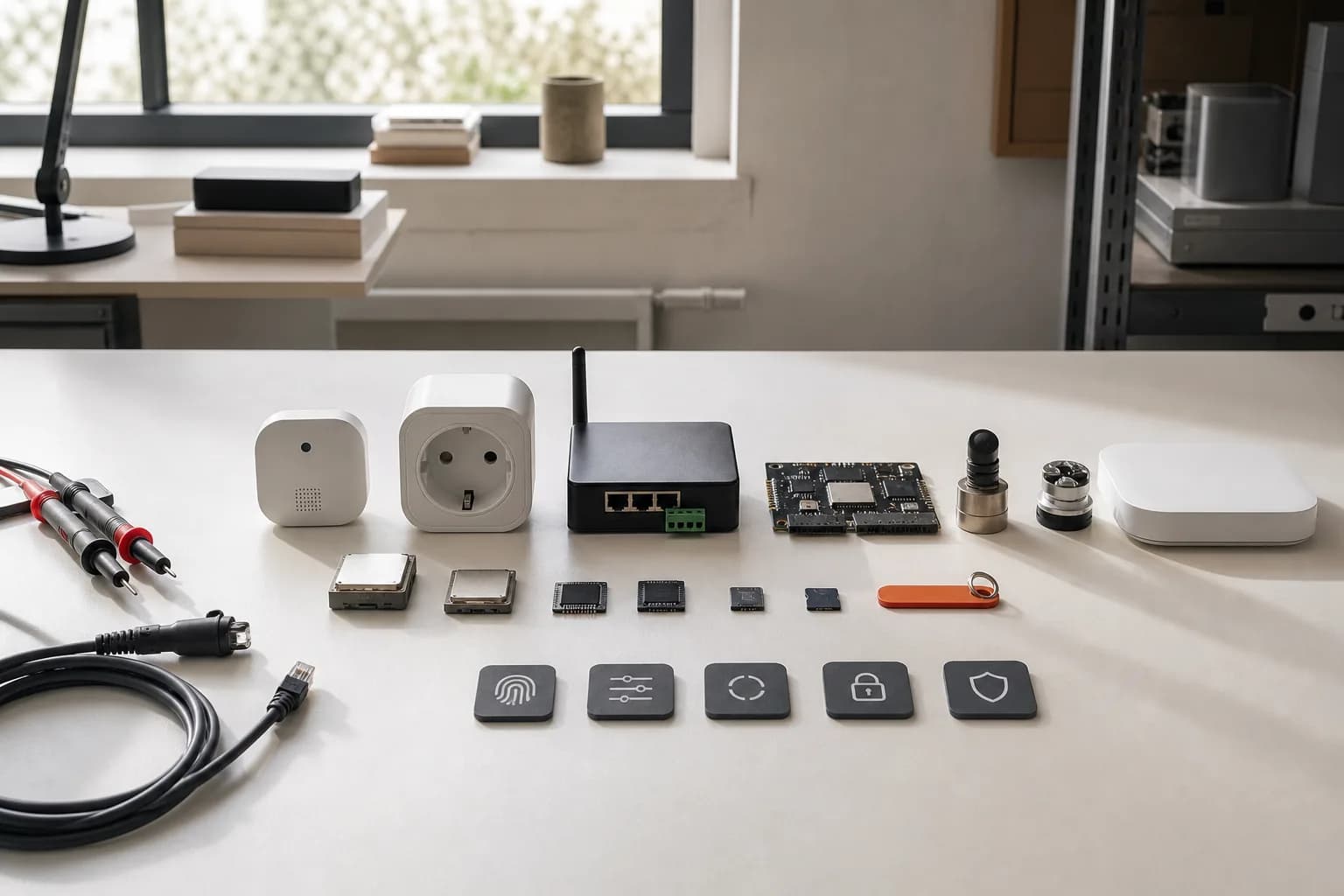
Test bench with generic sensors, a gateway, components, and electronic probes
A procurement requirement reduces risk only when it can be observed, tested, and connected to the system where the product will operate.AI-generated image under Velqory editorial direction.
Cybersecurity14 min read

Buying IoT: turn system controls into verifiable product requirements

NIST has opened SP 800-213 Rev. 1 for comment until 24 August. It is a draft for US federal systems, not a final standard or Portuguese law, but its question is universal: which concrete capabilities must the product provide for the system to manage risk?

Read analysis
Person uses a keyboard at a desk with headphones, a tactile controller, and abstract contrast cards
Accessibility needs testing across the real journey, including technology, content, and support.AI-generated image under Velqory editorial direction.
Regulation16 min read

Digital accessibility in Portugal: a plugin does not prove compliance

Portugal's regime transposing the European Accessibility Act has applied since 28 June 2025 to covered products and services. In e-commerce, evidence must cover the complete journey — information, identification, purchase, payment, support, and assistive technologies.

Read analysis

Each analysis links to the official source and says what changes in practice.

  1. 01Sources in view

    Every analysis links the official documentation it relies on.

  2. 02Operational context

    We translate change into decisions, owners and evidence.

  3. 03Continuous review

    We update the analysis when facts or guidance change.

  4. 04Identified imagery

    We disclose generated photography and credit documentary photography.

Is there an obligation or a system that needs to become operational?

We map the problem, write the scope and build the solution with acceptance criteria.